 WAS Auto
WAS Auto
WAS Auto
A failing brake booster can change the way a familiar vehicle feels within seconds. The pedal may become unusually hard, especially during slow traffic or repeated stops. You might hear a faint hissing sound near the pedal, notice longer stopping distances, or feel the engine stumble when braking. These details matter because the booster uses engine vacuum, or an electronic assist system, to reduce the effort needed at the pedal.
So, what are the symptoms of a failing brake booster? The answer is not always obvious. A hard pedal can also result from a vacuum leak, a damaged check valve, or another brake system problem. A soft pedal usually points toward different concerns, such as air or hydraulic faults. An experienced technician would inspect the pedal response, vacuum supply, hoses, master cylinder, and warning lights before identifying the booster as the cause. Guesswork can be misleading.
Small clues deserve attention. A driver may need both feet to stop smoothly, or the pedal may not return normally after release. That is serious. Testing should happen in a safe location, never in moving traffic. If braking feels weak, inconsistent, or unusually difficult, avoid driving until a qualified professional checks the vehicle. This guide explains the warning signs clearly, while recognizing an important limitation: symptoms can overlap, and only proper diagnosis can confirm the failure.
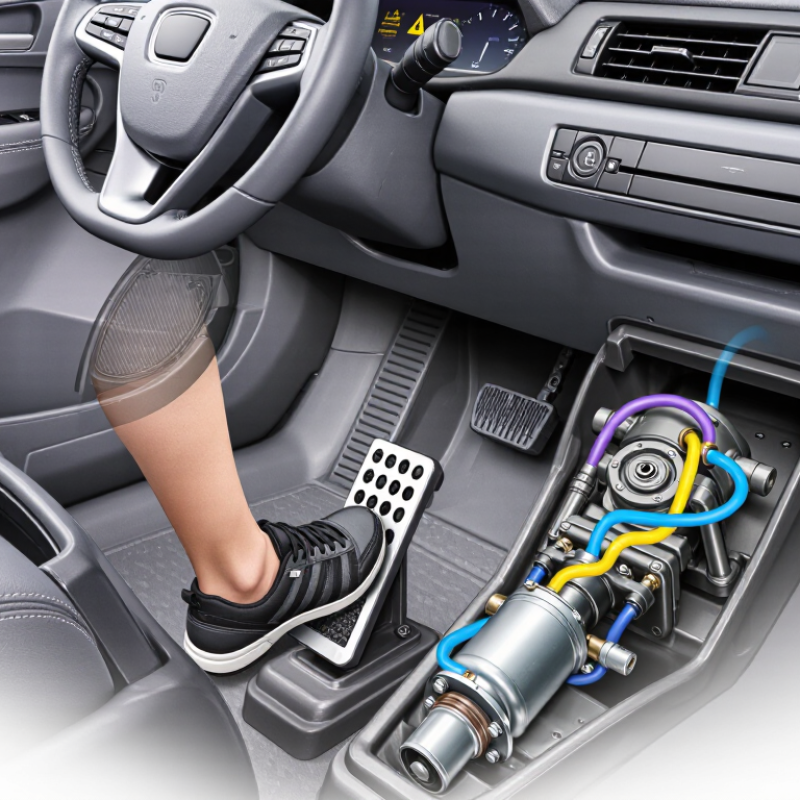
What Are the Symptoms of a Failing Brake Booster?
How a Brake Booster Supports the Vehicle’s Braking System
A brake booster multiplies the driver’s pedal force. It commonly uses engine vacuum or an electric pump. The booster does not create friction. Brake pads, rotors, and other parts still stop the vehicle. When assistance fades, the pedal may feel unusually hard. Your leg must work much harder. Stopping can also require more distance, especially in traffic.
A simple check can reveal a possible problem. With the engine off, press the pedal several times. Hold pressure, then start the engine. The pedal should move slightly downward. If it stays rigid, the booster, vacuum hose, or check valve needs inspection. A faint hiss near the pedal deserves attention. So does an engine that stumbles when braking. A soft or sinking pedal may indicate hydraulic trouble instead, not a booster failure.
NHTSA’s Federal Motor Vehicle Safety Standard No. 135 evaluates repeated stops, high-temperature braking, and partial-system failures. These tests show why consistent pedal assistance matters. NHTSA’s 2023 Traffic Safety Facts reported 40,901 traffic deaths in the United States. That report does not separate booster failures, which is an important limitation. Still, delayed braking can turn a small hazard into a serious event. Do not rely on guesswork. A qualified technician should measure vacuum, inspect hoses, and test pedal travel before continued driving. Some symptoms overlap, and that is where diagnosis becomes imperfect.
| Observable Symptom | What the Driver May Notice | Possible Brake-Booster-Related Cause | Other Possible Causes to Check | Recommended Action | Safety Priority |
|---|---|---|---|---|---|
| Hard brake pedal | The pedal requires substantially more leg force than usual, especially during normal stops. | Loss of vacuum assistance or an internal failure that prevents the booster from multiplying pedal force. | Vacuum hose damage, a faulty one-way check valve, engine vacuum problems, or a seized brake caliper. | Stop driving if braking performance is significantly reduced. Have the vacuum supply and booster system inspected promptly. | High |
| Longer stopping distance | The vehicle takes more road distance to stop even when the pedal is pressed firmly. | Insufficient power assistance may prevent the driver from applying the intended braking force quickly and consistently. | Worn brake pads or shoes, contaminated friction surfaces, low tire grip, air in the hydraulic system, or a failing master cylinder. | Do not continue normal driving until the complete braking system has been professionally evaluated. | High |
| Hissing sound near the brake pedal | A continuous or noticeable air-like hiss is heard when the pedal is pressed or held. | A leaking booster diaphragm, damaged vacuum hose, or defective check valve may allow air to enter the vacuum system. | Other intake-vacuum leaks or disconnected vacuum lines in the engine compartment. | Arrange an inspection soon. Avoid driving if the pedal is also hard or braking assistance is inconsistent. | Medium to High |
| Engine idle changes during braking | The engine speed drops, runs unevenly, or nearly stalls when the brake pedal is applied. | A vacuum leak in the booster or its hose can introduce unmetered air into the engine intake system. | Fuel, ignition, throttle, or unrelated intake-vacuum problems may produce similar symptoms. | Limit driving and have both the brake vacuum circuit and engine management system checked. | Medium to High |
| Brake pedal does not return normally | The pedal returns slowly, remains partially depressed, or feels unusual after braking. | Mechanical interference or an internal booster problem may affect pedal movement, although this is not the most common booster symptom. | Pedal linkage damage, a master-cylinder fault, restricted hydraulic return, or a sticking caliper. | Stop using the vehicle if the brakes drag or the pedal remains depressed. Request a complete brake inspection. | High |
| Intermittent loss of brake assistance | The pedal feels normal at some times but becomes hard or requires extra effort at other times. | An inconsistent vacuum supply, deteriorating check valve, hose restriction, or internal booster fault may interrupt assistance. | Engine operating issues, electrical brake-assistance faults, or hydraulic problems depending on vehicle design. | Have the vehicle diagnosed promptly; unpredictable braking assistance creates a serious safety risk. | High |
| Brake warning or assistance warning light | A dashboard warning light appears, sometimes together with changed pedal effort or braking behavior. | The vehicle may have detected a brake-assistance, vacuum, hydraulic, or electronic braking fault. | Low brake fluid, a wheel-speed sensor issue, worn pads, or another brake-system fault. | Read the vehicle’s warning information and arrange immediate professional diagnosis, especially if braking feels different. | High |
| Normal pedal feel but weak braking | The pedal may feel normal, yet the vehicle does not slow as effectively as expected. | A brake booster problem is less likely when pedal effort and travel feel normal, but booster performance should still be checked with the entire system. | Worn pads, glazed rotors or drums, contaminated friction material, poor tire traction, or hydraulic faults. | Arrange a full brake inspection rather than replacing the booster based on this symptom alone. | Medium to High |
| Pedal becomes firm after the engine is switched off | After several pedal presses with the engine off, the pedal becomes harder; this may be normal. | The booster’s stored vacuum is gradually used. A fault is more likely if the pedal becomes hard immediately or does not soften after the engine starts. | A failed check valve or insufficient engine vacuum may cause abnormal behavior. | Use a controlled booster function check and have unusual results verified by a qualified technician. | Check Soon |
Important: A brake booster supports braking by using vacuum or another power source to reduce the pedal effort required from the driver. Symptoms can overlap with master-cylinder, hydraulic, friction, tire, and engine faults, so diagnosis should cover the complete braking system. If the brake pedal is hard, stopping distance increases, or braking assistance is lost, stop driving when it is safe to do so and seek professional service.
The brake pedal may feel unusually firm or hard. You might need much more leg force. The pedal may sit higher or return slowly. A faint hiss near the pedal can signal a vacuum leak. These signs need inspection.
Yes, reduced assistance can make braking slower. You may need extra metres to stop. The risk becomes greater during rain, downhill driving, or sudden traffic. A vehicle that needs both feet deserves prompt attention.
No. A blocked hose, damaged check valve, worn pads, or hydraulic fault can feel similar. One symptom is not proof. The diagnosis may remain uncertain without testing.
Park on level ground and switch the engine off. Press the pedal about five times. Hold steady pressure, then start the engine. A working vacuum booster usually lets the pedal drop slightly. No movement may indicate a fault.
Listen for continuous hissing near the pedal or firewall. Inspect the vacuum hose for cracks, loose fittings, or collapse. A quiet booster is not automatically healthy. Electric systems may fail without hissing.
It can. A vacuum leak may cause a rough idle when you press the brake. The engine may stumble briefly. That clue matters, but it does not confirm booster failure.
Repeated driving is unwise if braking feels weak or inconsistent. Avoid traffic testing. Arrange professional inspection soon. A technician can check vacuum supply, hydraulic pressure, hose condition, and stored fault codes.
Do not test in traffic or repeat hard stops unnecessarily. Do not rely on engine sound alone. Do not assume the vehicle is safe because it still stops. I might misread one clue, too.
A brake booster helps reduce the effort needed to press the brake pedal by using vacuum or another form of pressure assistance. When it begins to fail, the pedal may feel unusually hard, braking may require more force, or the vehicle may take longer to stop. Other warning signs can include a hissing sound near the pedal, inconsistent braking response, an engine that runs poorly when the brakes are applied, or a pedal that slowly sinks while pressure is maintained. These symptoms may appear gradually, so early attention is important.
To check for a possible problem, turn off the engine, press the brake pedal several times, and then hold it down while starting the engine. A properly working booster usually allows the pedal to move slightly downward. If it does not, the booster or its vacuum supply may need inspection. Drivers should have the system assessed promptly when braking performance changes. Depending on the cause and condition, repairing a hose or valve may be enough, while a damaged booster may require replacement. Understanding what are the symptoms of a failing brake booster can help support safer maintenance decisions.
