 WAS Auto
WAS Auto
WAS Auto
Choosing brake fluid is not a cosmetic decision. It affects pedal feel, boiling resistance, seal compatibility, and emergency stopping performance. If you are asking “how to choose the right brake fluid for my car,” begin with the vehicle manufacturer’s specification, not the most expensive bottle.
The U.S. Department of Transportation’s Federal Motor Vehicle Safety Standard 116 sets minimum boiling-point requirements for automotive brake fluids. DOT 3 requires at least 205°C dry and 140°C wet boiling performance. DOT 4 requires 230°C dry and 155°C wet. These figures explain why DOT 4 is often selected for demanding driving, although higher numbers do not guarantee compatibility. SAE J1703 and SAE J1704 also provide industry guidance for glycol-based brake-fluid performance and quality. Always check the owner’s manual and reservoir cap.
No single fluid wins every time. DOT 5 is silicone-based and should not replace glycol fluids unless the vehicle specifically permits it. DOT 5.1 is glycol-based, despite its confusing name. Never mix fluids casually. A small, damp bottle in a hot garage may already contain absorbed moisture, reducing real-world protection. Brake fluid is hygroscopic. It slowly draws water from the surrounding air.
A practical inspection matters. Look for the required DOT grade, a sealed container, and a clear service history. Dark fluid deserves attention, but color alone cannot confirm safety. A workshop moisture test is more reliable. I may sound overly cautious, yet brake systems punish assumptions. The correct choice balances the manufacturer’s specification, climate, driving conditions, and replacement interval. When uncertain, consult a qualified technician and use the exact product standard listed for your car.
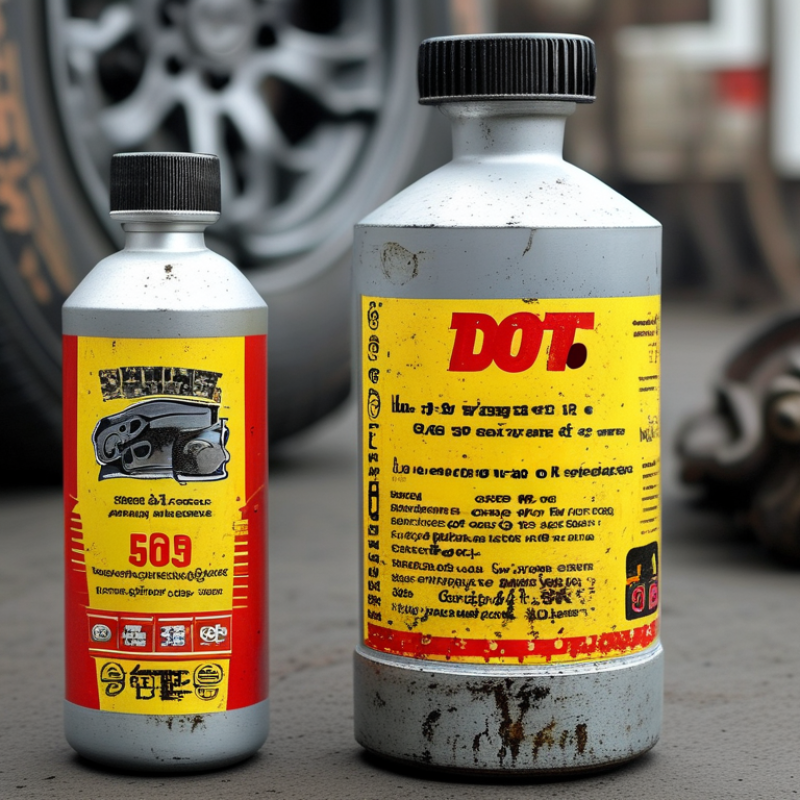
Choosing brake fluid starts with the vehicle’s specification, not the fluid’s color or price. Check the owner’s manual and the reservoir cap. They usually identify the required DOT rating. DOT 3 and DOT 4 are glycol-based fluids. DOT 4 generally offers higher boiling resistance, which suits vehicles facing heavy braking or mountainous roads. DOT 5.1 is also glycol-based, but it is not simply “better” for every car.
DOT 5 uses silicone fluid and should not be mixed with glycol-based types. Its chemical base and handling requirements differ significantly. DOT 5.1 can often work with systems designed for DOT 3 or DOT 4, but compatibility must still be confirmed. Ratings include dry and wet boiling points. The wet rating matters because brake fluid absorbs moisture over time. That moisture can lower boiling performance and create vapor during repeated hard braking.
Use a freshly opened, sealed container. Brake fluid absorbs water quickly after exposure to air. A soft pedal may indicate moisture, air, worn components, or a leak. Do not blame the fluid immediately. Inspect the system carefully. During servicing, avoid mixing types unless the vehicle maker permits it. A proper flush is safer than guessing. I have found that relying on familiar packaging can cause mistakes; the label and service manual deserve more attention. Read them twice. Safety depends on details.
| Brake Fluid Rating | Fluid Chemistry | Minimum Dry Boiling Point | Minimum Wet Boiling Point | Moisture Behavior | Compatibility and Mixing | Typical Applications | Key Advantages | Main Limitations | Selection Guidance |
|---|---|---|---|---|---|---|---|---|---|
| DOT 3 | Glycol ether | 205°C (401°F) |
140°C (284°F) |
Hygroscopic; absorbs moisture gradually from the atmosphere, which lowers its boiling point over time. | Generally compatible with DOT 4 and DOT 5.1 glycol-based fluids when the vehicle manufacturer permits it. Do not mix with DOT 5 silicone fluid. | Many older passenger vehicles and braking systems designed for a lower fluid specification. | Widely available, suitable for many conventional braking systems, and usually economical. | Lower boiling-point margin than DOT 4 or DOT 5.1; moisture contamination can reduce performance. | Use only when the vehicle handbook or reservoir marking specifies DOT 3. A higher rating is not automatically a suitable substitute. |
| DOT 4 | Glycol ether | 230°C (446°F) |
155°C (311°F) |
Hygroscopic; absorbs moisture, so regular inspection and replacement are important. | Generally compatible with DOT 3 and DOT 5.1 glycol-based fluids, subject to the vehicle manufacturer’s requirements. Not compatible with DOT 5 silicone fluid. | Common in modern passenger cars, motorcycles, and vehicles with hydraulic disc brakes or anti-lock braking systems. | Higher thermal margin than DOT 3 and widely specified for modern hydraulic brake systems. | Still absorbs water; some performance-oriented formulations may require more frequent maintenance. | A common choice when the vehicle specifies DOT 4. Follow the exact specification, including any low-viscosity requirement. |
| DOT 5 | Silicone | 260°C (500°F) |
180°C (356°F) |
Non-hygroscopic; does not readily absorb water, but moisture can collect in low points and remain corrosive. | Must not be mixed with DOT 3, DOT 4, or DOT 5.1 glycol-based fluids. System conversion requires complete removal of the previous fluid and confirmation of seal compatibility. | Specific vehicles and applications designed for silicone-based fluid, often where long storage or low moisture absorption is important. | Does not readily absorb atmospheric moisture and can help reduce paint damage from spilled glycol fluid. | Can be more compressible, may cause a softer pedal, and is not suitable for every anti-lock braking system or seal material. | Choose only when the vehicle manufacturer explicitly specifies DOT 5. Never select it simply because its number is higher. |
| DOT 5.1 | Glycol ether | 260°C (500°F) |
180°C (356°F) |
Hygroscopic; absorbs moisture and requires normal hydraulic brake-fluid maintenance. | Generally compatible with DOT 3 and DOT 4 glycol-based fluids when permitted by the vehicle manufacturer. Not compatible with DOT 5 silicone fluid. | Vehicles requiring a high boiling point or low-temperature viscosity performance, including some performance and advanced braking systems. | High boiling-point margin and, in many formulations, better low-temperature flow than conventional DOT 4. | Usually costs more than DOT 3 or standard DOT 4 and still absorbs moisture. | Use when the vehicle specifies DOT 5.1 or when the manufacturer approves it as an upgrade. Do not confuse DOT 5.1 with silicone DOT 5. |
| Low-Viscosity DOT 4 | Glycol ether | Typically at least 230°C (446°F) |
Typically at least 155°C (311°F) |
Hygroscopic; moisture absorption reduces the fluid’s boiling point and can contribute to corrosion. | May be chemically compatible with other glycol fluids, but viscosity and system requirements must match the vehicle specification. Never mix with DOT 5 silicone fluid. | Vehicles with electronically controlled braking systems that require faster fluid movement at low temperatures. | Lower viscosity can support responsive operation in cold conditions and in systems with small hydraulic passages. | Not interchangeable with every standard DOT 4 system; the required low-temperature specification must be verified. | Select only when the vehicle documentation calls for low-viscosity DOT 4 or an equivalent approved specification. |
| ISO 4925 Class 3 | Glycol ether | 205°C (401°F) |
140°C (284°F) |
Hygroscopic and affected by water contamination. | Comparable in performance level to DOT 3 in many cases, but the vehicle’s complete specification should always be checked. | Hydraulic braking systems requiring the ISO 4925 Class 3 performance level. | Provides a defined international performance classification. | The classification alone may not identify every viscosity, seal, or system requirement. | Use when the vehicle documentation specifically references ISO 4925 Class 3. |
| ISO 4925 Class 4 | Glycol ether | 230°C (446°F) |
155°C (311°F) |
Hygroscopic; water absorption gradually reduces performance. | Comparable in performance level to DOT 4 in many cases, but confirm the vehicle’s required viscosity and compatibility specifications. | Hydraulic braking systems requiring the ISO 4925 Class 4 performance level. | Higher boiling-point requirements than Class 3. | Does not by itself confirm low-viscosity or other special-system requirements. | Use when ISO 4925 Class 4 is specified, while also checking the required viscosity range. |
| ISO 4925 Class 5.1 | Glycol ether | 260°C (500°F) |
180°C (356°F) |
Hygroscopic; requires protection from moisture and scheduled replacement. | Often comparable to DOT 5.1 in performance level, but the full vehicle specification must be confirmed. Not compatible with DOT 5 silicone fluid. | Systems requiring high-temperature performance and the ISO 4925 Class 5.1 level. | High boiling-point requirements for demanding hydraulic brake applications. | Higher performance classification does not guarantee compatibility with every braking system. | Choose only when the vehicle manufacturer approves ISO 4925 Class 5.1 for the system. |
Important: Always follow the vehicle manufacturer’s specified brake-fluid rating and viscosity requirement. The DOT number is a performance classification, not a ranking in which every higher number is a universal upgrade. Keep the reservoir and container clean, use fluid from a sealed container, and replace the fluid according to the vehicle’s maintenance schedule.
: Check the owner’s manual and reservoir cap. Use the exact approved specification. The cap may not show every detail. Service records can reveal earlier repairs or fluid changes. When information conflicts, ask a qualified technician.
No. Color does not prove compatibility, performance, or age. Old fluid may look acceptable. Check its specification, moisture condition, and service history instead.
No. A higher heat rating does not guarantee compatibility. Some braking systems allow only a specific fluid type. Others permit an approved range. I once assumed higher was automatically better. That was careless.
Mountain roads, towing, and repeated hard braking create extra heat. A suitable higher-performance fluid may help, if the manufacturer permits it. Normal commuting may require only the listed specification. Heat matters. Winter matters too.
Do not mix fluids unless the vehicle manufacturer approves it. Chemically different fluids may damage seals. They may also change pedal response or braking consistency. Silicone-based fluid should not be treated as a simple upgrade.
Follow the replacement interval in the vehicle manual. Fluid can age while appearing clean. Moisture testing may reveal reduced performance. The test is useful, but not perfect. Leaks and pedal feel also need inspection.
Use a new, sealed container. Keep the cap closed during service. Wipe the reservoir before opening it. Protect painted surfaces and wear gloves. Do not reuse leftover fluid. Store new fluid upright.
A soft or spongy pedal needs attention. A warning light also matters. A falling fluid level may indicate air or a leak. Do not continue driving casually. After service, press the pedal firmly. It should feel solid.
Choosing the correct brake fluid is essential for safe and reliable braking. To understand how to choose the right brake fluid for my car, start by reviewing the vehicle owner’s manual or the specification printed on the fluid reservoir. Brake fluids differ by type, boiling point, viscosity, and moisture resistance, so using the wrong rating may affect braking performance or damage system components. The recommended specification should always be the first priority.
Next, consider your driving conditions, such as frequent traffic, steep roads, heavy loads, or high temperatures, and select a fluid with suitable performance characteristics. Before purchase, check the fluid’s clarity, sealed condition, compatibility with your vehicle, and storage instructions. Replace the fluid at the recommended interval, or sooner if it appears dark, contaminated, or moisture-affected. During maintenance, keep the system clean, avoid mixing incompatible fluids, prevent spills on painted surfaces, and dispose of used fluid responsibly.
