 WAS Auto
WAS Auto
WAS Auto
Why is one brake pad wearing faster than the others? The answer often hides behind heat, pressure, and small mechanical resistance. A thin inner pad beside a thick outer pad can reveal a sticking caliper piston. A rusty slide pin may keep one pad touching the rotor after the pedal is released. The wheel may feel unusually hot after a short drive. Sometimes, the problem is less obvious.
NHTSA’s Traffic Safety Facts identifies effective braking as a core vehicle safety requirement. The European Tyre and Rim Technical Organisation also stresses regular inspection of braking components, especially where uneven contact can reduce performance. These recommendations support a practical point: uneven wear should not be treated as normal maintenance alone. Automotive educator James D. Halderman puts it plainly: “Uneven pad wear is a symptom, not a diagnosis.” That sentence deserves attention.
This guide examines common causes, including seized guide pins, restricted brake hoses, misaligned hardware, contaminated friction material, and poor bedding. It also explains how technicians compare pad thickness, rotor temperature, piston movement, and caliper alignment. A simple visual check can miss a trapped inner pad. I have seen that mistake happen.
The repair may require cleaning, lubrication, hose testing, or caliper replacement. Replacing pads alone can waste money and leave the real fault untouched. Still, diagnosis is not always neat. Rust, driving style, road salt, and previous repairs can overlap. Reliable conclusions come from measured evidence, not assumptions made beside the driveway.
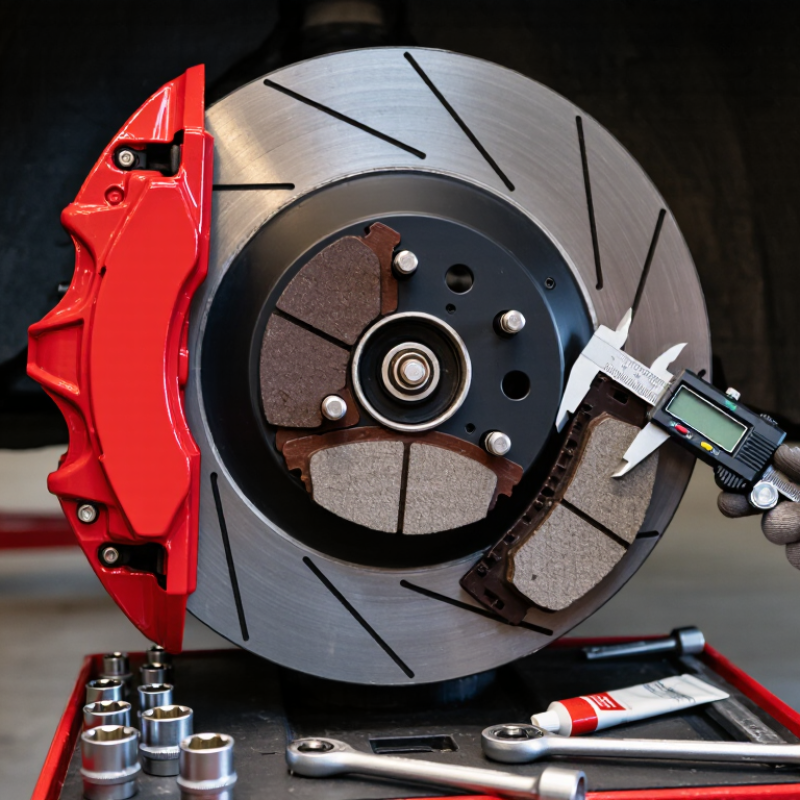
One brake pad wearing faster than the others usually indicates uneven pressure, not a defective pad alone. A seized caliper slide pin can stop one pad from releasing fully. A sticking piston can keep the inner pad pressed against the rotor. A damaged flexible hose may also trap hydraulic pressure. The wheel may feel unusually hot after a short drive. Sometimes, there is no obvious noise.
The UK Driver and Vehicle Standards Agency’s 2023–24 MOT data lists brake performance, brake components, and brake imbalance among recurring failure reasons. These categories matter because uneven pad wear often reflects a wider braking fault. During inspection, compare inner and outer pad thicknesses, rotor discoloration, piston movement, and slide-pin resistance. The difference can be surprisingly clear. Measure it.
UNECE Regulation No. 13-H evaluates service braking at speeds up to 100 km/h and includes parking-brake performance on a 20% gradient. These test conditions show why heat, pressure, and mechanical release all matter. If one pad is only slightly thinner, normal caliper tolerances may explain it. If it is dramatically thinner, continued driving deserves caution. I once found a nearly new pad worn to its backing plate because a rubber hose looked normal outside. That assumption was wrong. A qualified technician should check the caliper, hose, rotor, hardware, and fluid condition before replacing pads alone.
Uneven wear usually means restricted caliper movement or uneven contact. Compare the inner and outer pads before replacing anything. The thinner inner pad may indicate a sticking piston. Faster outer-pad wear often suggests seized guide pins. Do not blame the pad too quickly.
Remove the caliper safely and move both pins by hand. They should slide smoothly with firm, even resistance. Grinding or binding indicates a problem. Inspect the rubber boots for tears, moisture, and trapped rust. A damaged boot can hide internal corrosion.
A hot wheel may indicate brake drag. It is a warning sign, not proof. Restricted slides, a sticking piston, or a blocked flexible hose can prevent release. Check temperature carefully without touching the rotor. Stop testing if smoke or a strong burning smell appears.
Look for deep grooves, blue heat marks, cracks, and a raised outer lip. Measure rotor thickness against the service limit. A dial indicator can measure lateral runout more accurately than eyesight. A quick glance is not enough.
Yes. Rust under a retaining clip can hold one pad against the rotor. Bent clips and dry contact points can create similar pressure. Clean suitable contact areas carefully. Replace damaged hardware. One small clip can cause expensive wear.
Suspension damage or a hard impact may alter toe or camber. Uneven alignment can cause irregular tire wear and vehicle pulling during braking. Check for feathering, cupping, or one-sided tread wear. A professional alignment measurement can confirm the problem.
No. A single new pad does not fix the cause. Inspect both pads on the same axle, plus the rotor, piston, pins, and hose. Replace matching components in axle pairs when required. The original fault may otherwise return quickly.
Confirm each pad sits squarely in its guide. Check secure clips and freely moving guide pins. Lubricate only suitable sliding surfaces. Keep grease away from friction material and the rotor. Tighten fasteners to the specified torque. Pump the pedal until firm.
Perform several controlled, moderate stops for bedding. Avoid harsh braking immediately afterward. Recheck for pulling, noise, heat, and fresh uneven wear. A short road test can reveal problems. I once trusted a rushed repair; the loose guide pin proved me wrong.
Uneven brake pad wear is a common warning sign that the braking system is not applying pressure evenly. If you are asking, “why is one brake pad wearing faster than the others,” possible causes include a sticking caliper piston, seized slide pins, damaged hardware, a warped or uneven rotor, or wheel alignment problems. A careful inspection should check whether the caliper moves freely, the piston retracts properly, and the pads can slide smoothly in their mounting brackets. The rotor should also be examined for deep grooves, thickness differences, overheating, or excessive runout.
To correct the issue, replace damaged or excessively worn components and install the brake pads with clean, properly lubricated contact points. Both pads on the same axle should generally be replaced together when necessary, and the rotor should be resurfaced or replaced if it cannot provide an even braking surface. After repairs, test the brakes at low speed, listen for abnormal sounds, and confirm that the vehicle stops smoothly without pulling. Regular inspections can help prevent uneven wear from returning.
